Section 1: The Awakening Journey — From Entertainment to Advocacy
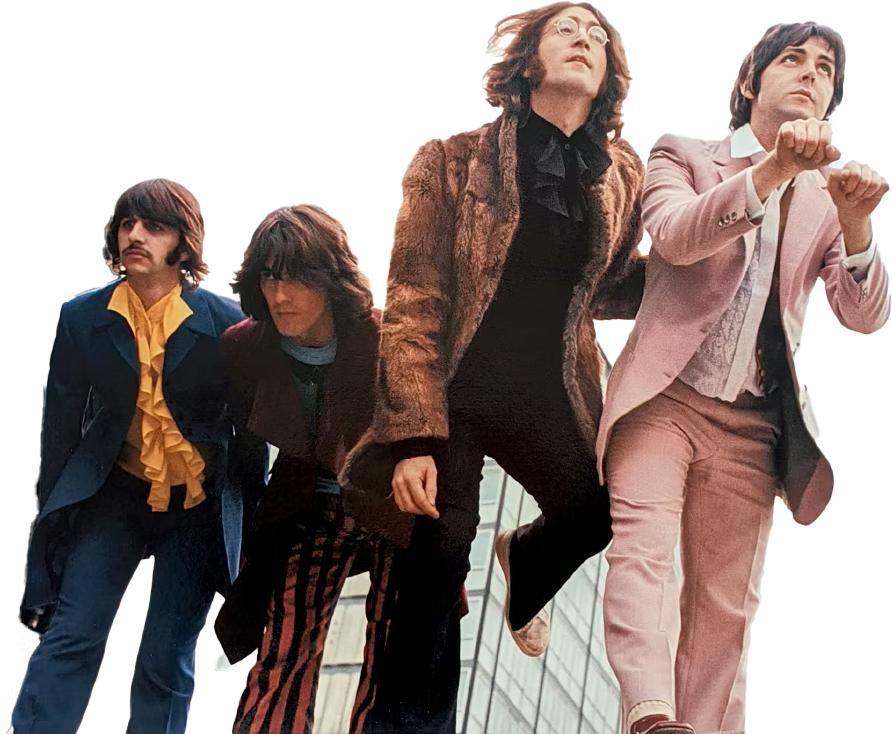
Research from Stanford's Graduate School of Business consistently shows that employees prefer working for companies led by executives who demonstrate clear values alignment between personal beliefs and business practices. The Beatles' transformation from teenage entertainers to global advocates illustrates how authentic leadership requires evolution beyond self-interest toward collective responsibility.
Their awakening wasn't sudden but gradual, reflecting expanding consciousness about world events and their platform's potential for positive impact. Early songs focused on personal relationships and youthful concerns. By the mid-sixties, with the release of Rubber Soul and Revolver, their music began to take on a more mature message, using their platform to address deeper personal and societal issues.
John's "Give Peace a Chance" emerged from understanding that simple, accessible messages often create more lasting change than complex political arguments. The song became a global protest anthem despite deliberately simple lyrics — within three months of recording, 500,000 protesters chanted these words at the Washington Monument.
This demonstrates what organizational psychology research confirms: sustainable influence comes from authenticity rather than manipulation. Leaders who align personal values with professional actions create trust that enables long-term impact.
What platform or influence do you currently possess that could address an injustice you've witnessed? Consider your professional network, community connections, or industry expertise. How could shifting from "What can I gain?" to "What can I contribute?" transform your approach to leadership opportunities?
Section 2: Platform Responsibility — Amplifying Voices That Matter
George Harrison's "Concert for Bangladesh" established the template for celebrity activism while demonstrating how leaders can leverage their platforms for humanitarian causes. Despite having no experience organizing large-scale relief efforts, George felt compelled to act after learning about the refugee crisis from his friend Ravi Shankar — proving that caring deeply matters more than perfect qualifications.
Research from McKinsey & Company consistently demonstrates that companies showing authentic social responsibility outperform purely profit-focused competitors in long-term shareholder returns.
The Beatles Platform Framework
- Authentic Advocacy — Take stands that involve genuine personal risk.
- Sustained Commitment — Develop long-term strategies vs. reactive responses.
- Visibility for Justice — Use influence to illuminate overlooked injustices.
- Values Alignment — Connect causes to personal and organizational mission.
John's support for activist Angela Davis during her imprisonment demonstrated how principled advocacy requires accepting personal consequences for beliefs. His 1971 tribute song risked alienating fans and industry relationships, yet the global attention generated by his advocacy helped ensure Davis received fair legal treatment.
This illustrated something powerful: injustice thrives in darkness but withers under sustained public attention.
Which social issue connects to your industry expertise or personal values? What would sustained advocacy look like compared to occasional symbolic gestures? How could your professional platform amplify voices that mainstream channels might overlook or minimize?
Section 3: Truth-Telling Leadership — Honesty Over Image Management
John's "Gimme Some Truth" reflected his growing frustration with political manipulation and propaganda during his FBI surveillance period, offering timeless guidance for leaders navigating information-saturated environments where transparency builds trust more effectively than carefully managed messaging.
Harvard Business Review research consistently shows that organizations prioritizing honest communication during challenges achieve better crisis recovery rates — up to 35% faster — compared to companies focusing primarily on reputation management.
The Beatles Truth-Telling Protocol
- Direct Communication — Address issues honestly without sophisticated spin.
- Self-Examination — Require transparency from yourself before demanding it from others.
- Solution Focus — Channel grievances into constructive commentary.
- Strategic Humor — Make difficult messages accessible without being preachy.
George's "Taxman" transformed personal frustration with extreme taxation into broader commentary about citizens demanding governmental accountability. Rather than just complaining privately, George channeled grievance into civic engagement, demonstrating how business leaders can address systemic issues through constructive criticism rather than passive acceptance.
What uncomfortable truth in your organization or industry needs honest acknowledgment rather than continued avoidance? How could you address this issue constructively without creating unnecessary defensiveness? What specific action could you take to move from complaint toward solution?
Section 4: Revolutionary Thinking — Change Through Love, Not Destruction
John's complex song "Revolution" wrestled with essential questions about change methodology that remain relevant for business transformation: Does sustainable improvement come through aggressive disruption or patient construction? His evolving lyrics reflected internal struggle between revolutionary fervor and principled non-violence, ultimately emphasizing that how we pursue change matters as much as what changes we seek.
Research from INSEAD consistently confirms John's instinct: transformations driven by genuine care for stakeholder wellbeing create more sustainable results than those motivated primarily by competitive destruction or personal advancement.
The Beatles Change Methodology
- Collaborative Disruption — Strengthen industries while advancing your company.
- Understanding Over Domination — Seek underlying interests in conflicts.
- Value Creation — Build lasting solutions vs. capturing from others.
- Stakeholder Care — Prioritize long-term relationship health.
Paul's "Pipes of Peace" draws inspiration from the 1914 Christmas truce during World War I, when soldiers spontaneously laid down weapons to share food and football games. This extraordinary event proved that even enemies can recognize shared humanity when given the opportunity for genuine connection — providing frameworks for resolving business conflicts through understanding rather than domination.
"Revolutionary energy powered by love builds lasting value, while revolution driven by resentment simply replaces existing problems with new dysfunction."
What business conflict are you approaching with unnecessarily aggressive tactics when collaborative alternatives might create better outcomes? How could genuinely seeking to understand opposing viewpoints reveal opportunities for mutual benefit that competitive thinking obscures?
Frequently Asked Questions
Platform Assessment helps evaluate influence opportunities for positive impact. Truth-telling protocol prioritizes honest communication over reputation management. Advocacy integration aligns business decisions with personal values consistently rather than compartmentally.
"Imagine" captures the principle that sustainable change begins with vision before manifesting in action. John Lennon's approach of presenting revolutionary concepts through accessible communication applies directly to organizational transformation and stakeholder engagement.
Research shows values-driven leaders achieve better employee retention, higher customer trust scores, and improved crisis navigation. Authentic leadership creates sustainable competitive advantages through stakeholder loyalty that pure operational efficiency cannot achieve.
Principled leadership enhances rather than undermines competitive performance. Truth-telling builds stakeholder trust, platform responsibility creates authentic differentiation, and conflict transformation often reveals collaborative opportunities that aggressive competition misses entirely.
Attempting all practices simultaneously instead of mastering one first. Start with Platform Assessment for 30 days, then add Truth-Telling Protocol. Sequential implementation ensures sustainable adoption while building confidence through measurable progress.
The Beatles demonstrated that authentic advocacy often creates rather than reduces business value. Companies that align profit objectives with meaningful social impact typically achieve better long-term financial performance than those focused solely on shareholder returns.
Get comprehensive implementation guides on Beatles business wisdom by joining the Fab Four Academy Community and pre-ordering The Fab Four Pillars of Excellence.