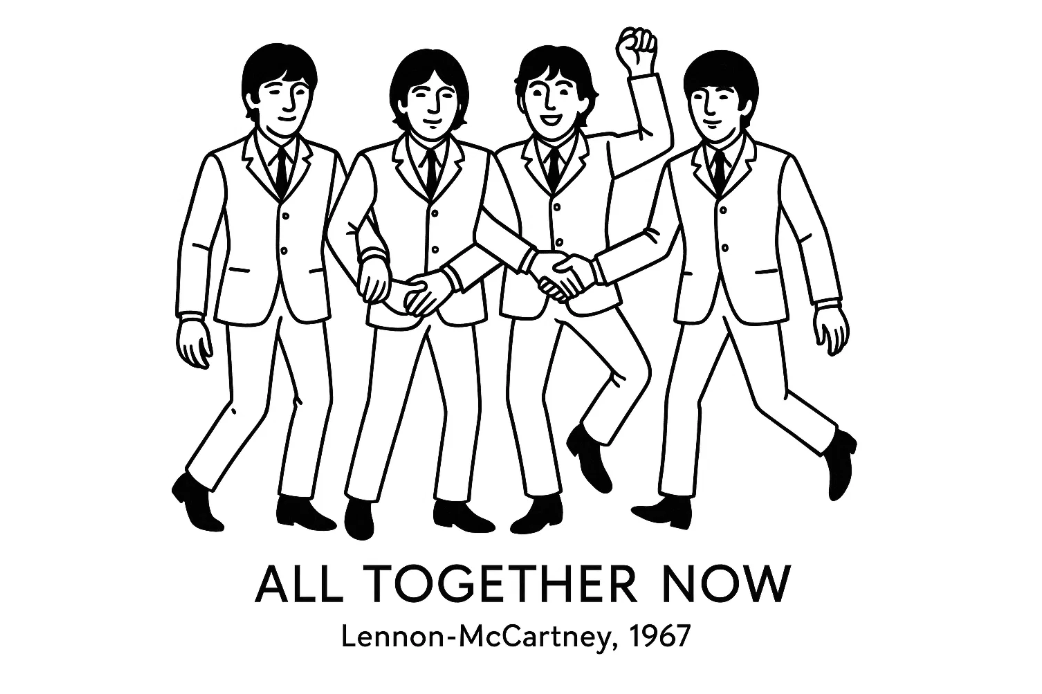
Created for The Beatles' animated film "Yellow Submarine," "All Together Now" emerged from Paul's playful genius as a sing-along children's song. With its simple, repetitive chorus and counting sequences, the track captures the essence of what made the Beatles exceptional — their remarkable unity of purpose and collective identity.
During their formative period in Hamburg and Liverpool, The Beatles functioned with an "all for one, one for all" mentality that defined their approach to everything. They shared hotel rooms, meals, struggles, and triumphs. The band made early agreements to split songwriting credits evenly between Lennon and McCartney regardless of who contributed more to each song - a practice that reinforced their team first approach over individual accomplishment. Even their stage presence reflected this unity, with their matching suits, synchronized bows, and coordinated movements creating the image of a single entity rather than four separate musicians.
This collective approach extended to their financial arrangements as well. From the beginning, the band split their earnings equally. This "equal partners" approach was revolutionary for its time and created a foundation where each member felt equally invested in the group's success. When one succeeded, they all succeeded.
This early Beatles ethos offers profound wisdom. While modern culture often celebrates individual genius and star performers, The Beatles remind us that extraordinary achievements frequently emerge from groups who prioritize collective success over personal recognition. The willingness to submerge individual ego into group identity, at least during formative stages, creates the trust and cohesion needed for breakthrough innovation.
Today, I'll celebrate shared successes rather than individual accomplishments, and I'll consider how my actions might reinforce a sense that "we're all in this together" rather than competing for individual recognition.
Where in your work or community life could you shift from "me" thinking to "we" thinking? What small changes might help create a stronger sense of collective identity and shared purpose?
