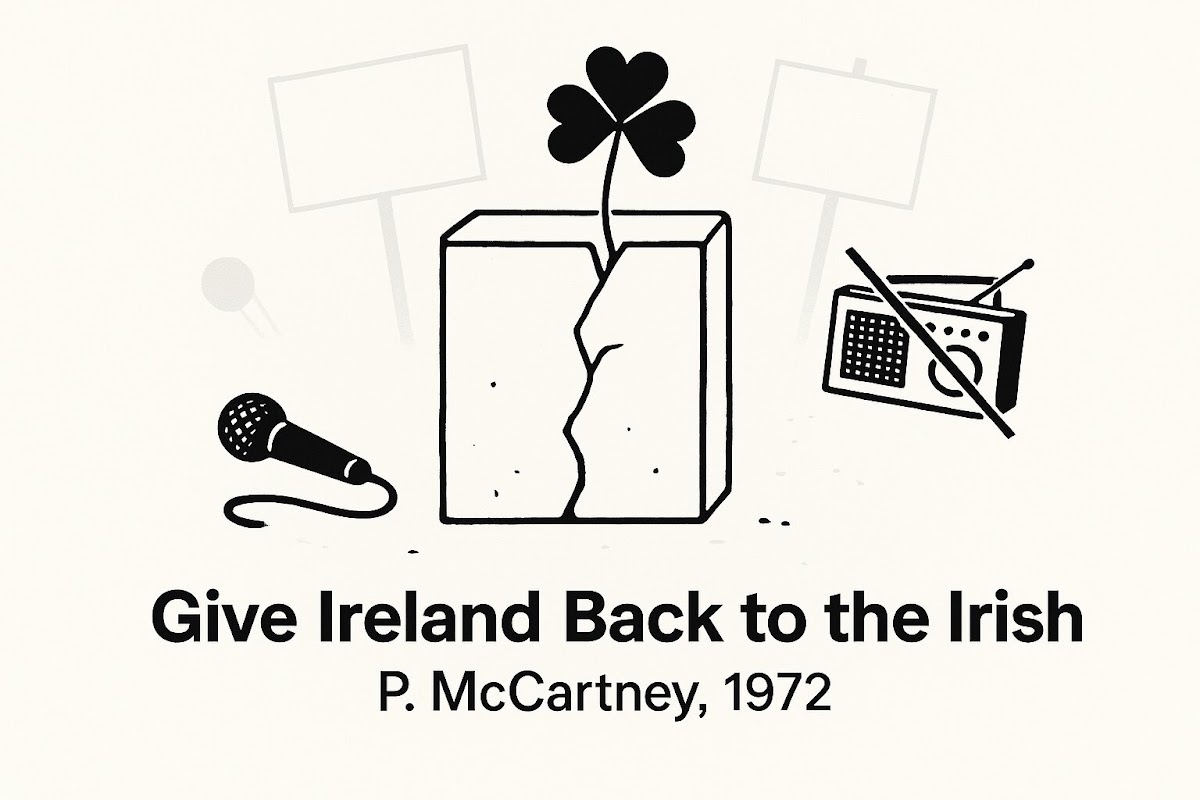
Boldly stepping into uncharted territory, Paul shocked the music world in 1972 when Wings released their most controversial single. The typically diplomatic Beatle had watched the events of Bloody Sunday unfold and felt compelled to abandon his usual political neutrality. Radio stations banned the song and critics questioned his judgment.
Activism does not come naturally to Paul, as it did to John and George. This incident drove Paul beyond his comfort zone into territory that risked his reputation and commercial success. Written in response to what he witnessed as colonial oppression in Northern Ireland. Paul's willingness to sacrifice popularity for principle demonstrated the depth of his feelings about the troubles in Northern Ireland.
Courage to question our own homeland is an integral part of a healthy democracy. Many of us accept our social structure as a permanent fixture, but it is a human creation subject to challenge and change. Paul's political awakening reminds us that blind loyalty to any system, regardless of its historical significance, can perpetuate injustice when that system fails its people.
Knowledge that today's "normal" was yesterday's revolution empowers us to envision a better future. Every breakthrough in civil rights and social justice began with someone brave enough to question our social structure. Paul's rare political statement teaches us that sometimes our greatest contribution isn't maintaining stability but courageously disrupting a corrupt system.
Today, I will examine one institutional assumption I've never questioned and consider whether it still serves the greater good.
What system or institution in your life deserves honest examination rather than automatic acceptance? How might questioning inherited structures create space for needed change?
